Oops! Something went wrong while submitting the form.
If you have ever opened your Google Ads dashboard to find your campaigns paused under a "Suspended account" notice, you already know the cost. A suspension in BNPL, crypto, or another restricted financial vertical does not just stop traffic. It stops momentum. Pipeline drains. CACs spike. Your CMO has a difficult conversation with your CEO. And the agency you hired to fix things often hands the appeal off to someone who has never filed one before.
This is the operational reality for most fintech advertisers in 2026. Google's enforcement of its Financial products and services policy has tightened steadily, and for good reason. But tighter policy is not the same as no advertising. Restricted does not mean impossible. With the right setup, the right disclosures, and a direct line to Google's policy team, restricted-vertical advertisers can run profitable Google Ads campaigns alongside everyone else.
Here is how we approach it for our clients in crypto, BNPL, and high-risk financial products.
Eligible but limited: What it actually means
Google's restricted-vertical framework uses a status that most advertisers misread: ads may be eligible to serve, but limited. In practice, that means your ads can run, but reach is constrained:
They serve to a smaller pool of users.
They show across a narrower set of placements.
They show only in countries where your business is properly licensed and verified.
They are suppressed when the search context is deemed sensitive.
This sounds like a bad outcome until you compare it to the alternative: outright suspension. An eligible-but-limited campaign is still capturing high-intent users actively searching for products like yours. Yes, the addressable demand is smaller than what an unrestricted advertiser sees. But the users who see your ad are deeper in the buying journey, the competition is thinner because so many advertisers have been disqualified, and the ROAS profile is often better than running paid social to cold audiences.
The mistake we see most often is brands treating "limited" as failure. The correct response is to treat it as a more focused funnel. Invest harder in landing page conversion, lean into bottom-of-funnel keywords, and accept that volume scales through compliance gains and close monitoring rather than through fighting policy.
Close monitoring matters here. Limited campaigns are more sensitive to small changes in policy interpretation. A weekly liaison with your account team and Google's policy reviewers, even a short email check-in or a brief status note, is often the difference between an eligible-but-limited campaign that compounds and one that drifts back into disapproval.
Compliance is the moat, not a checkbox
Most agencies treat Google compliance as a one-time task: submit the verification, hope it goes through. That mindset is what gets accounts suspended.
For restricted financial verticals, compliance is the moat. The brands that win Google Ads in BNPL, crypto, lending, and insurance are the ones whose websites and ad copy are demonstrably above the policy bar, not just inside it. The audit checklist we run on every new restricted client covers five layers:
Business identification. Google's advertiser verification is a hard prerequisite. For financial advertisers, this also includes business identifier verification. Your legal entity name, registered address, and jurisdiction of licensing all need to match across your incorporation documents, your website footer, and your Google Ads account profile exactly. Most disapprovals we see at this layer come from small mismatches between the legal name on file and the brand presented to consumers.
Local licensing in targeted countries. If you are targeting Singapore, hold a Monetary Authority of Singapore licence or registration where the product requires it. Same for ASIC in Australia, HKMA or SFC in Hong Kong, JFSA in Japan, FSC in Korea. Google requires advertisers in many financial sub-categories to be licensed in the country they target. Running ads into a country where you are not licensed, even by accident through broad geo-targeting, is one of the fastest paths to a permanent suspension. Wherever possible, get licensed in every market you want to advertise in. Where licensing takes time, restrict your targeting to the markets where you are already cleared, and expand only as licences come through.
Disclosures and disclaimers on the website. High-risk financial products like crypto, leveraged trading, derivatives, and BNPL require risk disclosures that are clear, visible, and consistent across landing pages and ad copy. The disclosure language Google expects varies by jurisdiction and product type. "Capital at risk" is the bare minimum for most regulated investment products. Crypto requires more explicit volatility and loss language. BNPL requires fee structure, late-payment, and credit-impact disclosures. These cannot be buried in footer fine print. They need to be visible without scrolling on every landing page that paid traffic touches.
Landing page integrity. Your landing pages must match the claims in your ads, the regulatory disclosures must be visible without scrolling, and the product flow must be free of dark patterns. Many suspensions do not come from the ad copy at all. They come from a landing page that promised one experience and delivered another.
Ad copy that reads as restraint, not hype. Performance creative in restricted verticals has to convert without overpromising. "Triple your money" copy gets you flagged. "Trade Bitcoin on a licensed Singapore exchange" does not.
When all five layers are tight, disapproval rates drop sharply and Google's policy team is willing to work with you on edge cases. When even one layer is loose, every escalation gets harder.
Why paid search is still the highest-intent channel for restricted advertisers?
There is a temptation among restricted-vertical fintech operators to give up on Google and lean entirely into affiliate, KOL, and organic channels instead. Those channels matter, and we run them for clients too. But abandoning Google means walking away from the only channel that captures users at the precise moment they are typing "best BNPL Singapore," "licensed crypto exchange Hong Kong," or "buy ETH Australia" into a search bar.
That is high-intent demand. The user has already done their research. They are not browsing. They are buying. The cost per acquisition on these queries, even when reach is policy-restricted, is typically lower than any other channel because intent is doing half of the conversion work.
A realistic note on affiliate marketing
Affiliate is a strong parallel route for restricted advertisers, and we run affiliate programmes for several of our fintech clients. But it carries its own version of the same compliance and commercial pressure that Google Ads does.
The reputable aggregator and comparison sites that drive the majority of meaningful affiliate volume in BNPL, crypto, and lending will only work with licensed partners. So the licensing argument that clears you for Google Ads is also what clears you for reputable affiliate. There is no shortcut around licensing in either channel.
Affiliate is also a crowded space. To get the better affiliates and aggregator sites to actively promote your brand rather than the three closest competitors already listed on their page, your commission structure, payout qualifiers, and creative assets need to match or beat what the rest of the market is offering. Affiliate is not an easier alternative to paid search. It is a parallel channel that rewards the same operational discipline.
Where the Google Partner relationship pays off
This is where our Google Partner relationship matters operationally, not just on a slide. As a Google Partner with direct policy escalation channels, we can:
File verification submissions with supporting documentation pre-mapped to Google's evaluation criteria, shortening review time.
Escalate ambiguous disapprovals to a human reviewer rather than waiting in the automated appeals queue.
Get pre-launch guidance from Google's policy team for campaigns sitting in grey areas, before they go live and burn budget on disapproved impressions.
Reinstate suspended accounts inside 14 days in most cases, versus 6+ weeks for advertisers filing alone.
For a BNPL or crypto brand spending six or seven figures a quarter on Google, the difference between a 14-day suspension and a 60-day suspension is often the difference between a quarterly target hit and a quarterly target missed.
A note on GEO: Generative Engine Optimisation
One trend we are watching closely for restricted financial verticals is the rise of generative engine optimisation, or GEO. As consumer queries shift from Google Search into ChatGPT, Perplexity, Gemini, and Claude, the brands cited inside AI-generated answers are starting to capture demand that previously flowed through traditional SERPs.
For restricted advertisers, this is a meaningful long-term opportunity. Where Google paid placement is constrained by policy, generative engines often surface licensed, well-documented brands without applying the same financial-services filtering at the ad layer. Early GEO wins for our clients have shown that well-structured product pages, clear regulatory disclosure language, and high-quality comparison content get cited disproportionately in AI answers, and the traffic that follows is often higher-intent than what comes through paid social.
We will be covering GEO in depth in a dedicated follow-up post, including how to audit your current visibility across generative engines, the on-page changes that drive citation rates, and how to integrate GEO into a Google Ads strategy rather than replace it.
Restricted does not mean abandoned
If your Google Ads account in crypto, BNPL, or another restricted financial vertical is suspended, throttled, or has never been approved in the first place, the answer is almost never "give up on Google." It is almost always: get compliance, ad copy, and landing pages above the policy bar, and work with a partner who can escalate properly when edge cases happen.
That is the work we do at Quokka Media. Every restricted advertiser's situation is different, so we do not run a one-size-fits-all programme. Instead, we offer a free consultation to understand your specific setup, the policy interpretation that is hitting you, your jurisdictions and licences, and your budget. From there, we recommend a path forward that actually fits.
Cryptocurrency is classified as a restricted financial product in Google’s advertising policies, much like other complex and speculative financial products. This means running ads for a crypto exchange isn’t as simple as launching a campaign, certain certifications and compliance measures must be met before Google allows your ads to go live.
For crypto exchanges looking to leverage Google Ads, understanding the requirements, approval process, and optimisation strategies is crucial for a successful acquisition campaign. At Quokka Media, we’ve helped crypto brands navigate these hurdles and run high-performing ad campaigns while staying compliant. Here’s what you need to know.
Google’s Certification Process for Crypto Exchanges
To run ads as a cryptocurrency exchange, there are 2 primary requirements, although these may vary depending on the target market:
1. Google Ads Certification
Before launching any crypto-related ads, you must obtain Google Ads certification. This acts as Google’s official approval to advertise financial products that fall under its restricted category. Without this certification, your ads will be disapproved automatically, even if you meet all other requirements.
How to Get Certified:
Submit an application via Google’s Financial Products and Services certification form.
Provide all necessary documentation proving your business legitimacy and compliance.
Wait for approval, which can take at least a month due to paperwork and review time.
2. Licensing in Your Target Market
Beyond Google’s certification, you must also be a licensed exchange in the markets you are advertising in. Each country has different regulatory bodies that oversee cryptocurrency exchanges:
Hong Kong – Securities and Futures Commission (SFC)
Thailand – Securities and Exchange Commission (SEC)
United States – Financial Crimes Enforcement Network (FinCEN)
United Kingdom – Financial Conduct Authority (FCA)
Why Is This Important?
Google only allows ads from regulated and compliant exchanges. Even if you’re certified under Google Ads, failing to meet local licensing requirements can lead to account suspension and ad disapproval.
Obtaining these licenses can be challenging, requiring detailed paperwork and strict compliance with local regulations. Many exchanges work closely with Google representatives to ensure their keywords, ads, and assets meet the necessary compliance standards.
If this sounds overwhelming, don’t worry! We’ve been there. We’ve helped exchanges navigate these complexities and get their ads live without unnecessary delays.
Best Practices for Running a Successful Crypto Ad Campaign
Once you’re fully approved, launching a Google Ads campaign requires careful tracking, optimisation, and competitor analysis. Here’s how to ensure success:
1. Track and Measure Performance
Before launching, set up conversion tracking to measure key metrics. This is to ensure that you are able to measure where your conversions are coming from and compare it against your ad spend in order to optimise accordingly.
Account sign-ups
First-time deposits
Completed trades
This data will help refine your targeting and bidding strategies for maximum return on ad spend (ROAS). Without accurate tracking, you won’t have visibility into what’s working and what needs adjustment. Google’s conversion tracking and analytics tools, such as Google Tag Manager and Google Analytics 4, can help ensure you’re collecting the right data.
2. Optimise CPA & Bidding Strategy
Managing your cost per acquisition (CPA) is essential. Use Google’s automated bidding strategies, such as Target CPA or Maximise Conversions, and consistently negate irrelevant search terms that don’t bring value.
Start with broad match and refine over time based on performance.
Use negative keywords to filter out unqualified traffic.
Experiment with automated bidding while keeping a close eye on costs.
Over time, this will help optimise your spending and ensure you’re attracting high-intent users.
3. Monitor Competitor Activity & Auction Insights
Keep an eye on auction insights, particularly for branded keywords. If competitors appear frequently in your search space, consider bidding on their keywords to capture impression share and stay competitive.
Use Google’s Auction Insights Report to analyse which competitors are bidding against your ads.
Adjust your bidding strategy to maintain visibility over competitors.
Test competitor conquesting campaigns to attract users searching for alternative platforms.
Understanding how you perform against the competition ensures your ads remain relevant and effective.
4. Manage Your Affiliates & Partners
If your CPA or ROAS from Google Ads outperforms affiliate-driven campaigns, it may be time to restrict paid search for affiliates and partners. This is especially true for your branded keywords (i.e. the name of your brand and/or firm). By managing affiliates effectively, you protect your brand’s search space and ensure that your marketing budget is spent efficiently.
Communicate clear rules prohibiting them from bidding on your brand.
Monitor compliance and enforce penalties (e.g., withholding commissions) for violations.
Use Google’s IP exclusion feature to prevent affiliates from running conflicting ads.
Final Thoughts
Running Google Ads for cryptocurrency exchanges isn’t just about launching a campaign, it’s about navigating a highly regulated landscape with precision and strategy. While getting certified and meeting local licensing requirements can take time, the effort pays off. Once approved, you can scale your acquisition campaigns with confidence and focus on optimising performance.
Beyond paid media, community engagement plays a vital role in customer retention. A well-rounded marketing strategy includes Telegram discussions, X (Twitter) content, activations, newsletters, educational materials and more. We’ve covered them with a little bit more depth in one of our blog posts here.
At Quokka Media, we specialise in navigating the complexities of crypto advertising. Whether you need help securing Google certification, crafting high-performing ad strategies, or staying compliant across markets, our team is here to guide you every step of the way.
Ready to take your crypto marketing to the next level?
If you haven’t already heard, the popular coupon-finding browser extension Honey, owned by PayPal, has recently come under scrutiny. A YouTube exposé by MegaLag claims Honey’s business model might be too good to be true. How does Honey save users millions while also spending millions on advertising? One end of this equation doesn’t seem to add up, and the reality may be more troubling than you think.
How Honey Works and the Ethical Dilemma
Honey’s appeal lies in its promise: help users save money by finding and applying coupons at checkout. To achieve this, Honey prompts users to interact with its browser extension during the purchase process. Here’s where things get murky: Honey places its cookie on the user’s browser, ensuring that if a purchase is made, Honey is credited with the commission even if another affiliate partner did the hard work of bringing the customer to the site in the first place.
This tactic exploits the “last-touch attribution” model that many affiliate and referral programmes use. Under this model, 100% of the commission goes to the partner who generated the last click before a purchase. This means that high-value affiliate partners who create compelling content, nurture customer relationships, and drive initial interest often lose out. The commission they worked hard to earn is diverted to Honey.
The Impact on Affiliate Partners
For affiliate marketers and brands, this practice can lead to significant challenges. Content creators, influencers, and other high-value partners are often the first touchpoint for customers, introducing them to the product and building trust. However, when Honey’s browser extension intercepts the customer journey at the last moment, these partners see their efforts go unrewarded.
Over time, these affiliates may stop promoting brands that allow this behavior. Why invest time and resources in creating content when a browser extension can siphon away their earnings? This erosion of trust and engagement can hurt a brand’s affiliate programme, reducing its overall effectiveness and driving valuable partners to competitors.
The Scale of Honey’s Operation
Honey’s business model relies on scale. By investing heavily in user acquisition, they aim to ensure their extension is installed on as many devices as possible. The more users they have, the more opportunities they have to claim commissions from affiliate programmes. While this approach benefits Honey, it creates a zero-sum game for other partners and can destabilise the affiliate ecosystem.
What Can Brands Do?
While Honey’s practices are controversial, marketers aren’t powerless. Here are some strategies to mitigate its impact:
Monitor Attribution Metrics Closely: Dive into your affiliate programme’s attribution stats. Identify which partners are driving the first clicks and how many touchpoints occur before a conversion. Understanding the customer journey can help you evaluate the fairness of commission allocations.
Implement Multi-Touch Attribution Models: Consider moving away from last-touch attribution to a multi-touch model that rewards all partners contributing to a conversion. This approach ensures that affiliates who initiate or nurture customer journeys receive their fair share of the commission.
Work with Transparent Agencies: Not all marketing agencies prioritise fairness in commission distribution. Partner with agencies that value transparency and have a track record of advocating for equitable practices within affiliate programmes.
Is It Okay to Work with Honey?
The answer depends on how you engage with Honey and your attribution model. If attribution data is closely monitored, working with them cautiously is feasible. However, given recent negative press, we recommend avoiding direct partnerships for now.
Honey’s extensive user base makes it a compelling partner for conversions, but brands must safeguard high-value affiliates by ensuring they aren’t overlooked. A balanced approach allows brands to tap into Honey’s reach while preserving affiliate programme integrity.
Conclusion
Honey’s business model underscores a broader challenge in affiliate marketing: the tension between convenience for consumers and fairness for partners. As digital marketing agencies, we’ve seen firsthand how unchecked practices can alienate top-performing affiliates and weaken programmes. By staying vigilant and prioritising transparency, brands can navigate this complex landscape, ensuring that all partners receive the recognition and rewards they deserve.
Affiliate marketing thrives on trust and collaboration. Let’s work together to keep it that way.
As Q4 2024 approaches, retailers across Asia are preparing for a surge in online shopping, driven by events such as Singles’ Day (11.11), Black Friday, and the general holiday season. With the increasing dominance of e-commerce, businesses, both large and small, are focusing on the latest trends to ensure they stay competitive in this high-stakes quarter. From social commerce and livestream shopping to eco-conscious promotions, understanding and leveraging these trends will be key to capitalising on the region’s booming digital marketplace.
This article will explore the top five e-commerce trends to watch in Q4 2024 and how both large retailers and small businesses can navigate Asia’s promotional landscape to maximise sales.
Social Commerce & Livestream Shopping on the Rise
In Asia, Meta’s livestream shopping features, particularly through Facebook Live and Instagram Live, are transforming the way consumers discover and purchase products. These platforms have evolved into powerful tools for e-commerce, allowing brands, big and small to engage their audiences in real-time, creating immersive shopping experiences. The trend is gaining traction as consumers in the region increasingly prefer interactive, mobile-first shopping.
Meta Livestream's Impact
Asia’s e-commerce landscape is highly mobile-driven, with a growing number of consumers shopping directly through social platforms. According to Statista, over 70% of online shopping in the region is done via mobile devices, making Facebook and Instagram perfect platforms for retailers to reach this audience. The cultural preference for real-time interaction is also fueling the rise of livestream shopping, where consumers can ask questions, watch product demonstrations, and make purchases in one seamless experience.
In 2023, Sephora Singapore capitalised on Instagram Live during the 11.11 sale by partnering with beauty influencers to showcase their holiday collection. The influencers hosted live product demonstrations, answered questions from viewers, and offered limited-time discounts. Sephora’s use of Instagram’s shopping tag feature allowed viewers to purchase directly from the livestream, resulting in a 30% increase in online sales compared to previous campaigns. The combination of real-time engagement, influencer partnerships, and exclusive deals helped Sephora cut through the noise during one of the most competitive shopping seasons.
Large Retailers Leveraging Meta Livestream
Large retailers like Nike and Sephora in Hong Kong are using Facebook Live and Instagram Live to drive real-time sales by showcasing new product launches and offering exclusive discounts. For instance, during the 11.11 mega sale in 2023, Nike partnered with influencers and hosted several Instagram Live sessions to introduce limited-edition products. These livestreams featured product demonstrations, real-time audience Q&A, and time-sensitive offers, which created urgency and boosted conversions. The interactive format also allowed Nike to deliver a more personalised shopping experience, connecting with thousands of viewers in real-time.
Opportunities for Small Retailers
While large retailers like Sephora have the resources for polished, large-scale livestreams, smaller businesses are also thriving by leveraging Meta platforms.Smaller retailers are also finding success on Meta’s livestream platforms. Local beauty brands and independent sellers in markets like Thailand, Vietnam, and Hong Kong are using Facebook Live to engage with their niche audiences. Unlike big-budget productions, these businesses conduct more informal, personal live streams that emphasise direct interaction. For example, a small retailer in Thailand selling handmade jewellery might collaborate with a local influencer to host a Facebook Live event, where they demonstrate their products and respond to viewer questions in real time. This approach fosters a more personal connection, which builds trust and loyalty, even without the massive budgets of larger brands.
Mega Sales Events Dominate Q4 Promotions
Mega sales events—particularly Singles’ Day (11.11), Black Friday, and Cyber Monday—have become the biggest drivers of e-commerce sales in Asia, making Q4 the most competitive period of the year for online retailers. In 2023, Singles’ Day generated over $140 billion in sales globally, with the majority of purchases made within China. For retailers, the challenge isn’t just about offering discounts, but also about cutting through the noise.
Highly Competitive Season: Cutting Through the Noise
While mega sales events present significant opportunities, they also create a cluttered marketplace where every retailer is fighting for consumer attention. Here are some strategies to stand out:
Partnerships and Collaborations: Collaborating with key opinion leaders (KOLs), influencers, or even publishers can help brands reach new audiences. By partnering with popular influencers on platforms like TikTok, YouTube, or WeChat, brands can add authenticity to their promotions and appeal to different consumer segments.
Limited Edition and Exclusivity: Offering limited-edition products or exclusive collaborations during sales events is another effective way to differentiate your brand. Adidas, for example, has used influencer collaborations to release special collections during Black Friday, drawing attention to their brand and driving sales.
For smaller retailers, collaboration with micro-influencers or partnering with other small brands for cross-promotions can generate excitement and broaden reach without the massive budgets of larger brands.
Buy Now, Pay Later (BNPL) Continues To Gain Traction
As consumers seek more flexible payment options, Buy Now, Pay Later (BNPL) services have become an integral part of the e-commerce experience. According to Worldpay’s 2024 Global Payments Report, BNPL transactions are expected to grow by 19% globally, with Asia-Pacific being one of the fastest-growing markets for these services.
Expected Trends for Q4 2024
The popularity of BNPL services such as Atome, Klarna, and Afterpay is driven by younger consumers who prefer to manage their finances by breaking down large purchases into smaller, interest-free payments. This method is particularly popular during high-spend periods like Singles’ Day and Black Friday.
For both large and small retailers, integrating BNPL options can increase average order values (AOV) and drive conversion rates, especially for big-ticket items such as electronics or luxury fashion. Small businesses that offer BNPL services can compete with larger players by making their products more affordable for consumers who are budget-conscious but still want to participate in mega sales events.
Leverage Data and AI for Personalisation
As more consumers shop online, businesses have access to vast amounts of data that can be used to create personalised shopping experiences. This is particularly important in Q4, when shoppers are making decisions based on previous browsing behaviours, wish lists, and items left in shopping carts. Leveraging AI-powered tools can help retailers craft personalised messages, recommend relevant products, and even offer dynamic pricing based on consumer profiles.
Prepping for Mega Sales: Early Basket Additions
In the lead-up to mega sales events like Singles’ Day and Black Friday, consumers are already planning their purchases, often adding items to their baskets weeks in advance. Retailers that use data analytics to track these behaviours can gain valuable insights into what their customers are most interested in and tailor their promotions accordingly.
Case Study: Amazon uses AI to analyse customer behaviour and recommend products based on individual preferences. By offering personalised deals before mega sales events, Amazon ensures its promotions resonate with each customer, increasing conversion rates.
Web Inclusivity and Mobile Apps
While large retailers have the resources to develop personalised mobile apps, small businesses can still offer tailored experiences through personalised email marketing and AI-driven web recommendations. Implementing tools that allow for personalised messaging based on browsing history or previous purchases can significantly improve engagement, even for businesses without dedicated apps.
In 2024, consumers are more eco-conscious than ever before, and this shift is influencing purchasing decisions. As a result, brands that prioritise sustainability and promote eco-friendly initiatives are more likely to attract environmentally aware shoppers.
An Edge Through Eco-Conscious Promotions
While large retailers like Patagonia have long championed sustainability, small businesses can use eco-conscious promotions to carve out a niche. For example, smaller retailers can introduce buyback programs (where customers can return used products in exchange for store credit or discounts) or offer sustainable packaging as a point of differentiation.
Case Study: A smaller brand like Organic Basics, which specialises in sustainable fashion, promotes its eco-conscious values through discounts tied to eco-friendly initiatives, such as offering customers discounts when they choose low-impact shipping options or make purchases during eco-awareness events. This not only resonates with environmentally conscious consumers but also builds brand loyalty.
Partnering with charities or running cause-based marketing campaigns that donate a portion of sales to environmental organisations can also help small retailers build emotional connections with their customers, fostering long-term loyalty.
Conclusion
Q4 2024 is shaping up to be one of the most dynamic periods for e-commerce in Asia, with trends like social commerce, mega sales events, and eco-conscious promotions driving consumer behaviour. Both large retailers and small businesses must be strategic in how they approach this season, leveraging trends such as BNPL, livestream shopping, and AI-driven personalisation to maximise their potential.
While larger companies may have more resources to dominate mega sales events, smaller retailers can use targeted strategies, like collaborations with influencers, eco-conscious promotions, and personalised messaging, to compete effectively. In the highly competitive landscape of this quarter, those who adapt to these trends and understand their customers’ evolving preferences will stand to benefit the most.
Stay ahead of the competition this Q4! Contact us at contact@quokkamedia.io to learn more.
In today’s digital age, the boundaries between social interaction and online shopping have virtually disappeared. Social media platforms like Facebook, Instagram, and TikTok, originally designed for communication and entertainment, have rapidly evolved into powerful e-commerce hubs. The phenomenon known as social commerce is changing how brands reach consumers and how people shop, blending social networking with instant purchasing.
What sets social commerce apart from traditional e-commerce is the integration of shopping features within the platforms people already use every day. From Facebook Shops to Instagram's shoppable posts and TikTok's viral shopping challenges, these platforms provide businesses with unparalleled opportunities to reach consumers. Additionally, live streaming has become a game-changing tool that creates real-time interaction between brands and audiences, further enhancing the effectiveness of social commerce. Let’s explore how these platforms are redefining online shopping and driving success in digital marketing.
Facebook: From Social Network to Shopping Hub
As the largest social media platform with over 2.9 billion users, Facebook has been a pioneer in social commerce, transforming the way businesses engage with their audience. The platform has introduced several features to facilitate in-app shopping, providing a seamless user experience.
Facebook Shops: Building Digital Storefronts
In 2020, Facebook launched Facebook Shops, allowing businesses to create customisable digital storefronts within Facebook and Instagram. This feature enables users to browse, inquire about products through Messenger or WhatsApp, and make purchases without leaving the app. Facebook Shops offer an easy setup for small and large businesses alike, making it more accessible to run an online store and reach millions of potential customers.
For digital marketers, Facebook Shops are a powerful tool for promoting products directly to a highly targeted audience. With Facebook’s advanced ad targeting capabilities, businesses can showcase their shops to users based on their preferences, interests, and behaviours, enhancing the chances of conversion.
Facebook Marketplace: Local and Global Reach
Facebook Marketplace, launched in 2016, caters to peer-to-peer sales but has also become a valuable platform for businesses to list their products. It allows brands and individual sellers to reach local buyers, offering a platform to promote products directly in their communities. With its integration into the Facebook app, Marketplace makes it easy for users to browse listings and communicate with sellers.
For digital marketers, Facebook Marketplace offers an affordable, highly localised way to connect with customers who are ready to purchase. It bridges the gap between global reach and local sales, making it an essential part of a brand’s social commerce strategy.
Instagram: Where Discovery Meets Commerce
Instagram, with its emphasis on visual content, has naturally transitioned into a social commerce powerhouse. With over 1 billion users, Instagram’s focus on aesthetics and storytelling makes it an ideal platform for brands to showcase their products and engage directly with their audience.
Shoppable Posts: Seamless Shopping Experiences
One of Instagram’s most popular social commerce features is shoppable posts, where users can click on tags within a post to see product details and make purchases. This transforms user behaviour from passive scrolling to active shopping. Shoppable posts can be integrated into a brand’s feed, stories, and even Reels, offering multiple touchpoints for users to engage with products.
For digital marketers, this offers a unique opportunity to blend content with commerce. Instagram’s shoppable posts allow brands to create inspiring, lifestyle-oriented content that not only attracts users but also converts them into customers without disrupting their browsing experience.
Instagram Stories: Driving Urgency in Shopping
Instagram’s ephemeral Stories feature has also become a key tool for social commerce. Product stickers, swipe-up links, and countdown timers create a sense of urgency that drives users to act quickly. Limited-time offers and exclusive deals in Stories encourage immediate purchasing, making it a highly effective channel for flash sales and new product launches.
Instagram Live Shopping: Real-Time Engagement
Live streaming on Instagram has added an exciting dimension to social commerce. With Instagram Live Shopping, brands can host real-time shopping events where viewers can ask questions, see product demonstrations, and make purchases directly through the live video. This interactive format builds trust and creates a sense of community, which can lead to stronger brand loyalty and higher conversion rates.
TikTok: Entertainment-Driven Commerce
TikTok, known for its short, engaging video content, has quickly become a social commerce sensation, particularly among younger audiences. TikTok’s viral nature and creativity make it a powerful platform for product discovery and purchasing.
TikTok Shopping: Bridging Entertainment and Commerce
In 2021, TikTok introduced TikTok Shopping, allowing businesses to create in-app storefronts where users can discover and buy products without leaving the app. TikTok's algorithm excels at delivering personalised content, making product discovery seamless for users. TikTok Shopping enables brands to reach potential customers through engaging video content, often paired with viral trends and challenges.
For digital marketers, TikTok’s focus on authentic and creative content makes it an ideal platform for influencer partnerships. Branded hashtags like #TikTokMadeMeBuyIt have turned products into overnight sensations, driving massive sales and increasing brand visibility.
Live Streaming on TikTok: An Interactive Shopping Experience
TikTok Live Shopping has become a powerful tool for real-time engagement, blending entertainment with shopping. During live streams, creators or brands can promote products, offer demonstrations, and engage with viewers in real-time. The interactive nature of live streaming encourages users to stay engaged and ask questions, leading to higher trust and conversion rates.
The Impact of Live Streaming on Social Commerce
Live streaming is revolutionising social commerce by providing a highly engaging, real-time shopping experience. Platforms like Facebook, Instagram, and TikTok have embraced live streaming as a way to create a direct connection between brands and consumers.
Real-Time Interaction Builds Trust
Live streaming offers something traditional e-commerce can’t—immediacy and authenticity. Viewers can ask questions, see how products work, and get live responses from the brand or influencer. This real-time interaction builds trust, which is critical for driving conversions. Whether it’s a product demonstration, Q&A session, or exclusive live sale, live streaming fosters a sense of community and personal connection with the brand.
Driving Urgency and Impulse Buying
Live shopping events often create a sense of exclusivity and urgency. Limited-time deals, special offers, and live-only discounts encourage impulse buying, making it a powerful tool for digital marketers. The combination of social interaction, entertainment, and commerce increases user engagement and boosts sales.
Conclusion: The Future of E-Commerce Is Social
Social commerce is reshaping the way consumers discover and buy products. Platforms like Facebook, Instagram, and TikTok are leading this transformation, offering businesses new opportunities to engage with customers through shoppable posts, live streaming, and in-app storefronts. The rise of live streaming has further amplified the success of social commerce, making it an essential tool for digital marketers looking to build trust and drive sales.
As more consumers turn to social media for product discovery, the future of e-commerce is undeniably social—and businesses that embrace this trend will thrive in the ever-evolving digital landscape.
Ready to take your social commerce to the next level? Contact us today at contact@quokkamedia.io for expert marketing strategies to supercharge your e-commerce performance.
Looking for a social media experience that goes deeper than endless scrolling? Telegram offers a compelling alternative. This secure messaging app fosters a vibrant community, unique features, and the ability to connect with highly engaged users. We'll explore what makes Telegram special and how businesses can leverage its advertising platform to reach new audiences. Get ready to unlock the hidden potential of Telegram!
The social media landscape is a crowded one, with established giants vying for our attention. But amidst the familiar faces, a challenger has emerged, carving a unique niche for itself: Telegram. This cloud-based messaging platform boasts over 500 million monthly active users, a testament to its growing influence.
However, Telegram goes beyond just sending messages. It prioritizes user privacy and security, offering features like self-destructing messages and end-to-end encryption. But what truly sets Telegram apart is its ability to foster vibrant communities through large groups and channels. Here, thousands or even millions of users can gather around shared interests, fostering a sense of connection and engagement.
This unique combination of a privacy-focused platform with a highly engaged user base has not gone unnoticed. Recognizing its potential, Telegram launched its official advertising platform in 2021. This exciting development opens a new frontier for businesses looking to expand their reach. Telegram Ads offer a compelling option, allowing brands to connect with a targeted audience within these dynamic communities.
In this article, we'll delve deeper into the world of Telegram, exploring its features and how it fosters a fertile ground for brand engagement. We'll then unveil the power of Telegram Ads, showcasing the benefits they offer businesses and the strategies to maximize their success. So, buckle up and get ready to discover the hidden potential of Telegram and its innovative advertising platform.
Deep Dive into Telegram: A Feature-Rich Ecosystem
Telegram transcends the boundaries of a typical messaging app, offering a multifaceted experience that caters to diverse needs. Let's delve deeper into the key features that set Telegram apart:
1. Privacy at the Forefront:
Self-Destructing Messages: Telegram prioritizes user control over their data. The "Secret Chat" feature allows users to send messages that automatically disappear after a predetermined time from both sender and receiver devices, offering an extra layer of privacy for sensitive conversations.
End-to-End Encryption: For added security, Telegram offers end-to-end encryption for chats. This ensures that messages can only be read by the intended recipient(s), and not even Telegram can access the content.
2. Fostering Communities: Groups and Channels
Breaking the Size Barrier: Unlike other platforms that limit group sizes, Telegram allows for massive groups and channels, accommodating thousands, even millions of users. This fosters vibrant communities around shared interests, from photography enthusiasts to cryptocurrency traders.
Structured Communication: Channels function as one-to-many broadcast platforms. Admins can share information with a large audience, while user comments can be restricted, creating a platform for announcements or curated content. Groups, on the other hand, facilitate two-way communication, allowing members to engage in discussions, share ideas, and collaborate on projects.
3. Unmatched Speed and Scalability:
Distributed Powerhouse: Telegram leverages a distributed cloud infrastructure, spreading data across multiple servers globally. This ensures lightning-fast message delivery, eliminating delays even when handling massive user volumes.
Always Available: The distributed architecture also makes Telegram highly resilient. Unlike centralised systems, a technical issue in one location wouldn't affect the entire platform, ensuring continued communication for users.
4. Content Diversity: Beyond Text
Multimedia Playground: Telegram goes beyond plain text messages. Users can send photos, videos, voice notes, files of any type (documents, zip archives, music files), and even animations. This rich content support allows for a more engaging and informative communication experience.
5. Cultivating a Connected Community:
The Power of Shared Interests: The combination of large groups, channels, and diverse content formats fosters a strong sense of community within Telegram. Users with similar interests can connect, share information, and collaborate on projects within these groups and channels. This creates a fertile ground for brand engagement and targeted advertising.
By understanding these core features, businesses can leverage Telegram's unique ecosystem to connect with highly engaged audiences, build brand awareness, and drive targeted traffic for their marketing goals.
Telegram Ads: A New Frontier in Marketing
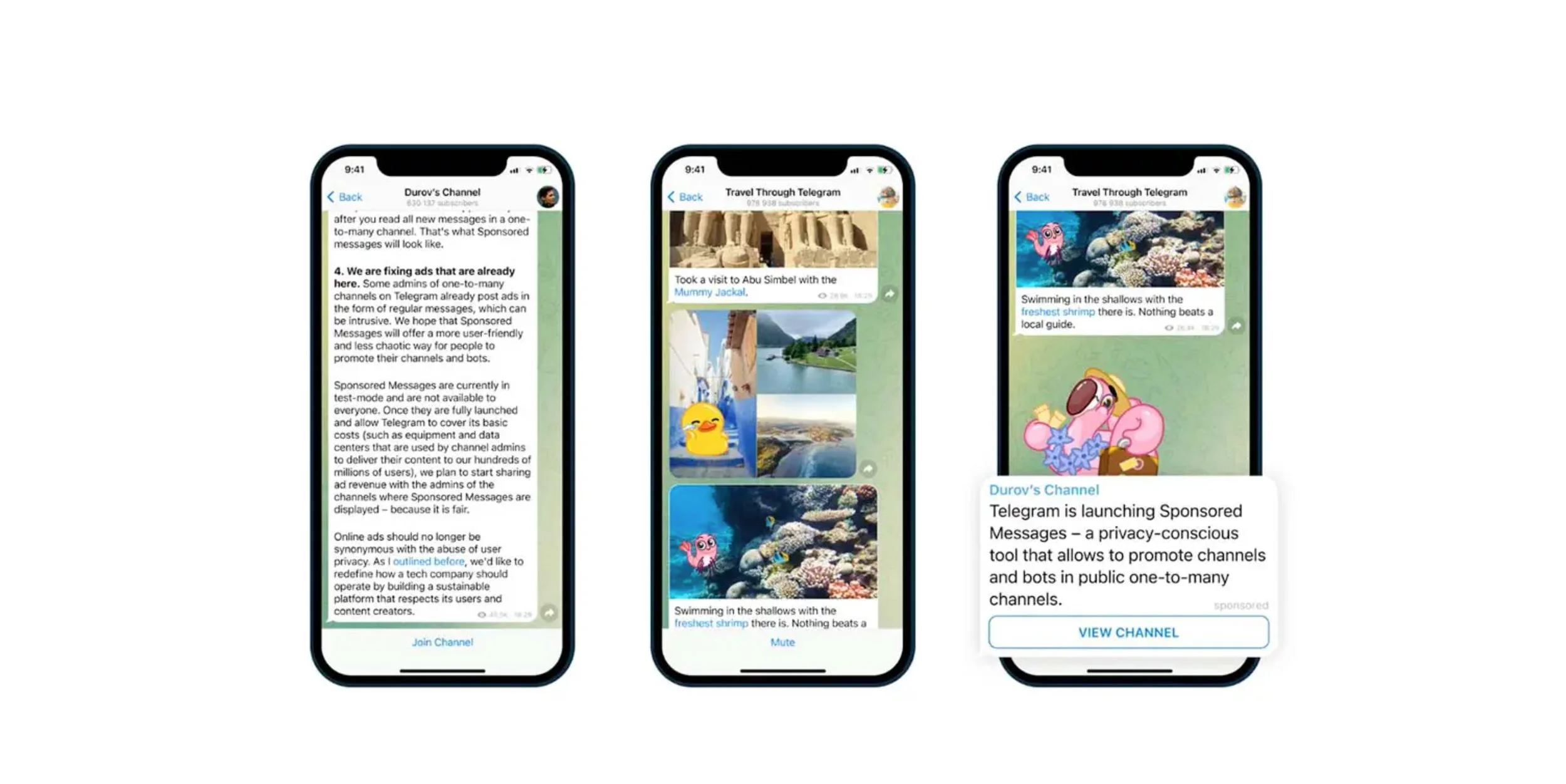
Recognizing its potential for targeted advertising, Telegram launched its official platform in 2021. Here's an in-depth of what sets Telegram Ads apart and the unique advantages they offer:
1. Contextual Targeting: A Respectful Approach
Focus on Relevance: Unlike traditional ad platforms that track user data to target individuals, Telegram Ads prioritize context-based targeting. Ads are displayed within relevant public channels that have over 1,000 subscribers. This ensures a higher chance of reaching a receptive audience already interested in the channel's topic. For example, an ad for a fitness tracker would be placed in a health and wellness channel, increasing the likelihood of viewers being interested in the product.
2. The Power of Brevity: Text-Based Ads
Crafting Impactful Messages: Telegram Ads utilize a text-based format with a character limit of 160, similar to a tweet. This format encourages advertisers to craft concise and impactful messages that resonate with the channel's theme and capture user attention within a short timeframe. It emphasizes clear communication and a strong call to action.
3. Granular Control: Selecting the Right Channels
Targeted Audience Reach: Advertisers have a high degree of control over where their ads appear. They can choose specific channels based on various factors like channel topic, audience demographics (age, location), and subscriber count. This allows for highly targeted campaigns that reach a specific user base relevant to the brand's products or services.
4. Transparency and User Privacy by Design
Building Trust: Telegram prioritizes user privacy. Ads are clearly labeled as "sponsored messages," differentiating them from organic content within the channel. Additionally, user data is not used for targeting the ads. This transparency fosters trust with users and avoids any privacy concerns.
5. Data-Driven Optimization: Performance Tracking
Measuring Success: Advertisers have access to detailed reports that track the performance of their campaigns. These reports include metrics like impressions, clicks, and conversions. This data allows for campaign optimization and adjustments to maximize return on investment (ROI). Businesses can identify which channels and ad variations perform best and refine their strategies accordingly.
Unleashing the Power of Telegram Ads for Your Business
We've explored the unique features of Telegram and how it fosters a vibrant ecosystem for brands to connect with potential customers. Now, let's delve into the exciting world of Telegram Ads and the arsenal of benefits they offer businesses.
Unlocking Growth with Engaged Audiences:
Imagine a platform where users are actively participating in discussions, sharing information, and genuinely interested in content. That's the magic of Telegram channels. Telegram Ads tap into this dynamic by placing your brand message directly within these communities. This translates to reaching a highly engaged audience whose receptive to brand messaging and more likely to click on your ads or join your Telegram channel. Think of it as having a conversation with a group of people who are already interested in what you have to offer.
Building Brand Awareness with Laser Focus:
Gone are the days of scattershot advertising. Telegram Ads allow you to target your ideal customer with surgical precision. By selecting specific channels based on demographics, interests, and even channel size, you can ensure your message reaches the exact audience you're looking for. This targeted approach fosters brand awareness within a focused market segment, potentially leading to increased brand loyalty and a community of dedicated followers.
Driving Traffic Like a Pro:
Imagine using Telegram Ads to seamlessly funnel users towards your brand's Telegram channel or website. This is precisely what these ads excel at. By crafting compelling calls to action, you can prompt users to subscribe to your channel for exclusive content, news, or special offers. Alternatively, you can drive traffic to your website, where they can learn more about your brand and products. This two-pronged approach of channel growth and website traffic allows for further engagement and conversion opportunities, ultimately boosting your bottom line.
A Word to the Wise: Considerations and Strategies
While Telegram Ads offer a treasure trove of benefits, it's important to be aware of a few things:
Targeting Nuances: Currently, Telegram Ads can't target users based on individual demographics or interests. This might be a limitation for brands seeking ultra-granular audience segmentation. However, the channel-based targeting offers a powerful alternative.
The Power of Brevity: Telegram Ads are text-based with a character limit. This means crafting impactful messages requires strong creative skills and a focus on clear communication with a compelling call to action.
Building Your Telegram Haven: To fully leverage Telegram Ads, consider establishing and cultivating a dedicated Telegram channel. This involves creating valuable content and actively engaging with your audience within the channel.
Optimising for Success: Strategies We Love
Here at QuokkaMedia, we're passionate about helping businesses thrive in the ever-evolving marketing landscape. When it comes to Telegram Ads, these strategies are our go-to for campaign success:
Channel Research Extraordinaire: We don't leave anything to chance. Our team conducts in-depth research to identify relevant channels that perfectly align with your target audience's interests. We analyze factors like channel size, engagement levels, and content themes to ensure your ads reach the right people.
The Art of Compelling Copywriting: Crafting clear, concise, and attention-grabbing ad messages is our forte. We write copy that resonates with the channel's theme and speaks directly to your target audience. Highlighting your value proposition and including a strong call to action is key.
Emojis and Formatting: The Secret Weapon: Don't underestimate the power of a well-placed emoji! We strategically utilize emojis and basic formatting options to enhance the visual appeal of your text-based ads, making them stand out within the channel and grab user attention.
Data-Driven Optimization: We Live By It: Regular campaign performance monitoring and data analysis are crucial for success. We use insights to identify what's working and what's not, allowing us to optimize your campaigns for maximum impact and return on investment.
Exploring Telegram Ads for Business Growth
The digital marketing landscape is a battlefield, with established giants vying for dominance. However, a challenger has emerged – Telegram. This secure, privacy-focused messaging platform boasts over 500 million monthly active users, a testament to its growing influence.
But Telegram goes beyond simple messaging. It fosters vibrant communities through large groups and channels, allowing thousands to connect around shared interests. This unique combination of a highly engaged user base and a privacy-conscious environment hasn't gone unnoticed. Recognizing its potential, Telegram launched its official advertising platform in 2021, opening a new frontier for businesses seeking targeted audience reach.
Why Telegram Ads Deserve Your Attention
Telegram Ads offer a compelling alternative to traditional advertising platforms. Here's a glimpse into what makes them stand out:
Engaged Audience, Amplified Results: Imagine reaching users actively participating in conversations, genuinely interested in content. Telegram channels offer this very opportunity. Telegram Ads place your brand message directly within these communities, connecting you with a receptive audience more likely to click on your ad or join your channel.
Laser-Focused Targeting: Gone are the days of scattershot advertising. Telegram Ads allow you to target your ideal customer with surgical precision. By selecting specific channels based on demographics, interests, and even channel size, you ensure your message reaches the exact audience you're looking for. This targeted approach fosters brand awareness within a focused market segment, potentially leading to increased brand loyalty and a dedicated following.
Driving Traffic Like a Pro: Imagine seamlessly funneling users towards your brand's Telegram channel or website. Telegram Ads excel at this. Craft compelling calls to action, prompting users to subscribe to your channel for exclusive content or visit your website for special offers. This two-pronged approach drives traffic and fosters engagement opportunities, ultimately boosting your bottom line.
Ready to take action? By partnering with the right digital marketing agency, you can unlock the full potential of Telegram Ads and watch your brand take centre stage within this dynamic and engaged platform. Contact us today and see how Telegram Ads can propel your business forward!
Riding the Wave of Real-Time Communication
Forget waiting for press releases or meticulously crafted social media posts – X thrives on immediacy. Imagine breaking news unfolding – with X, you can be at the forefront of the conversation, sharing updates and insights as they happen. Live events like product launches or behind-the-scenes tours become interactive experiences, fostering a sense of connection and excitement among your audience. Even trending topics can be leveraged – jumping into relevant conversations with witty commentary or informative threads positions your brand as a thought leader and keeps you relevant in the ever-changing digital space. This real-time communication strategy grabs attention, sparks conversations, and drives engagement, keeping your audience glued to your X feed.
Targeting Like a Laser: Reaching the Perfect Audience
X boasts a user base in the millions, offering a vast potential to expand your customer reach. But X goes beyond just broad exposure – its true power lies in targeted marketing. Imagine being able to tailor your message to resonate with a specific audience segment. X's advertising tools allow you to do just that. By leveraging demographic data like age, location, and income, you can target your ideal customers with laser precision. But X takes it a step further – you can target users based on their interests and online behaviours. Do you sell sporting equipment? Target users who follow sports accounts and engage in fitness-related conversations. This ensures your marketing messages aren't lost in the noise – they reach the right people at the right time, maximising the effectiveness of your campaigns and ensuring a higher return on investment.
From Audience to Community: Fostering Engagement Through Interaction
X is more than just a platform for broadcasting messages – it's a breeding ground for interaction and relationship building. Unlike traditional advertising channels, X allows for a two-way dialogue. Features like likes, retweets, and replies open the door for direct engagement with your audience. Respond to comments, answer questions, and participate in conversations – this human touch builds relationships and fosters brand loyalty. Imagine a customer having a question about your product – by responding promptly and addressing their concerns directly, you not only provide exceptional customer service but also build trust and establish yourself as a brand that cares. X's interactive features don't stop there – polls and threads allow you to involve your audience in discussions and decision-making processes. Imagine gauging audience interest in a new product through a creative poll or sparking a conversation about a new feature through a thought-provoking thread. This level of audience participation fosters a sense of community and keeps your brand at the forefront of their minds. By harnessing the power of interaction, X transforms your marketing from simply pushing messages to building a community of engaged and loyal brand advocates.
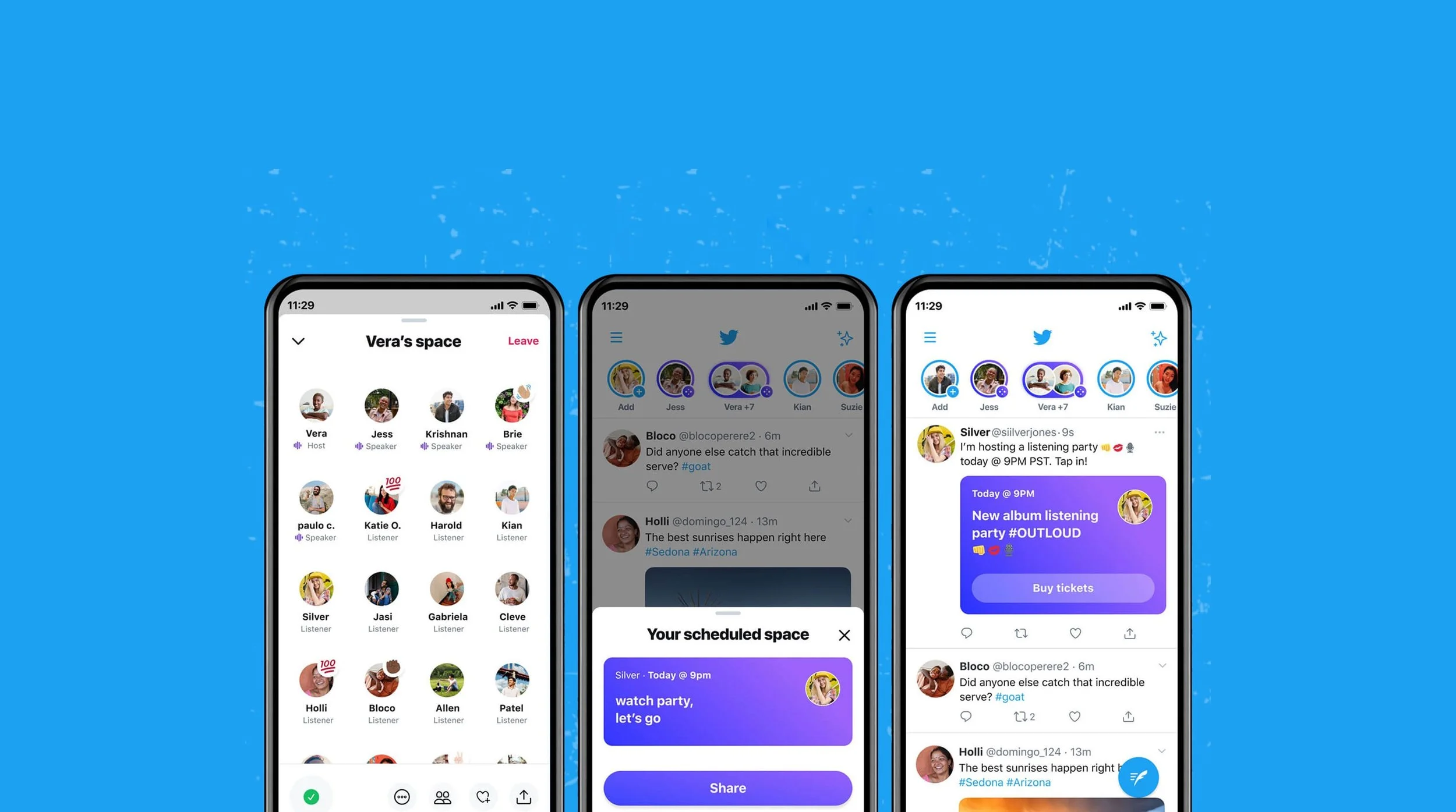
What are X Spaces?
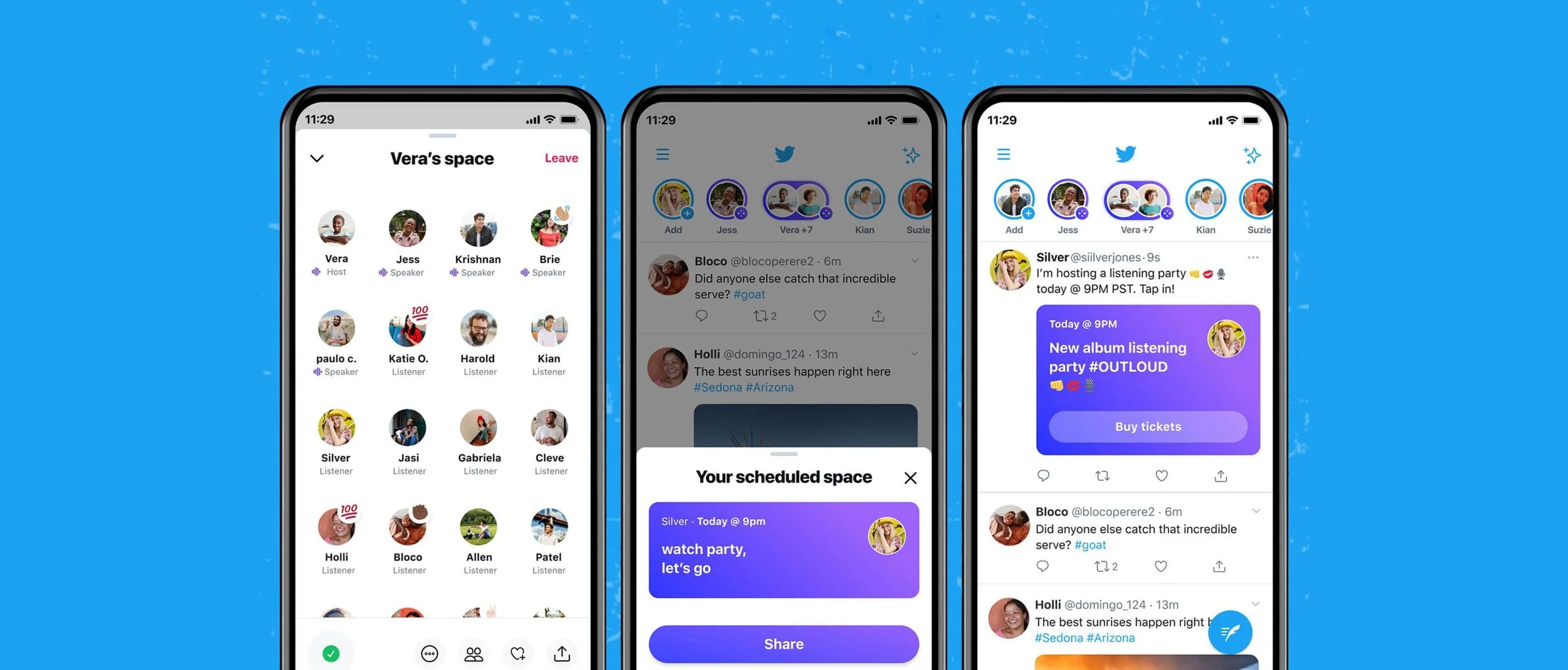
X Spaces are live audio chat rooms within X, enabling users to host and join real-time discussions. They provide a unique platform for interactive, voice-based communication, adding a new dimension to how brands can engage with their audience.
Features of X Spaces
Host and Speaker Roles: The host controls the space and can invite speakers. This structure allows for organised and focused discussions.
Listener Participation: Listeners can request to speak, making the sessions interactive.
Recording: Spaces can be recorded for those who miss the live event, extending their value.
A Strategic Advantage for Marketers
The dynamic world of X Spaces offers a treasure trove of possibilities for marketers seeking to amplify their reach, build brand loyalty, and ultimately drive conversions. Here's a closer look at how X Spaces can be strategically integrated into your marketing plan:
Enhanced Engagement: Building Deeper Connections Through Live Audio
X Spaces provide a more personal and engaging way for brands to connect with their audiences compared to traditional text-based interactions. This live audio format allows brands to showcase their authenticity and build trust, fostering a deeper connection with their audience. Imagine a brand representative having a real-time conversation about their company values and mission on an X Space. The audience can hear the passion and enthusiasm in their voice, creating a more genuine and relatable brand experience. This shift from text to live audio fosters a sense of immediacy and involvement, allowing brands to connect with their audience on a more emotional level.
Leveraging Influencer Collaborations: Expanding Your Reach and Credibility
In today's digital landscape, influencers wield immense power. Partnering with these trusted figures for X Space collaborations can significantly amplify your brand's reach and establish instant credibility. Imagine a scenario where a renowned beauty influencer co-hosts an X Space dedicated to your new skincare line. Their existing audience is instantly exposed to your brand, and their endorsement adds a layer of trust, encouraging viewers to explore your product. This strategic collaboration not only expands your reach but also positions your brand favourably within the influencer's established community.
Live Product Launches – A Gateway to Excitement and Engagement
X Spaces are the perfect platform for launching new products with a bang. Imagine unveiling your latest creation through a live, interactive X Space session. Live demonstrations showcase the product in action, allowing viewers to witness its features and benefits firsthand. Following the demonstration, a dedicated Q&A session empowers potential customers to have their questions answered in real-time. This interactive approach fosters excitement and engagement, transforming viewers from passive observers into active participants who are more likely to be converted into paying customers.
Building a Thriving Community: Cultivating Brand Loyalty
Regular X Spaces can be the cornerstone of a thriving brand community. Think of them as virtual hangouts where you can connect with your audience on a deeper level. These sessions can be used to discuss industry trends, share exciting brand updates, and even host interactive discussions. Imagine hosting an X Space dedicated to the latest trends in your industry, inviting guest speakers, and fostering open conversation with your audience. This two-way communication fosters a sense of connection and belonging, leading to a more loyal and engaged brand community.
X Spaces are a goldmine for real-time market research. Imagine hosting an X Space discussion centred around a specific industry challenge. By directly engaging with your target audience, you gain valuable insights into their pain points, preferences, and buying behaviours. This real-time feedback is invaluable for refining your products, services, and overall marketing strategy. Think of it as a focus group happening in real-time, allowing you to gather authentic customer feedback and make data-driven decisions to optimise your offerings.
Driving Traffic and Conversions: The Power of Exclusivity and Urgency
Promoting your X Spaces effectively through strategic tweets and targeted social media campaigns can drive significant traffic to your sessions. But how do you incentivize participation and convert viewers into loyal customers? The answer lies in the power of exclusivity and urgency. Imagine offering exclusive product discounts or early access to new features during your live X Space sessions. This creates a sense of urgency and exclusivity, motivating viewers to tune in and participate. By offering these limited-time incentives, you not only drive traffic to your X Spaces but also increase the likelihood of conversions, turning viewers into paying customers.
Building Audience Engagement with X Spaces
Consistency is King: The Power of Regular Scheduling
In the fast-paced world of online content, consistency is key to building a loyal audience for your X Spaces. Regularly scheduled sessions, whether weekly, bi-weekly, or monthly, do more than just inform your audience – they create anticipation. Knowing exactly when to tune in allows viewers to plan their schedule and make your X Spaces a part of their routine. This predictability fosters trust and encourages repeat engagement. Imagine your favourite TV show – wouldn't it be frustrating if the air date kept changing? The same principle applies to X Spaces. Consistency builds a reliable viewing experience, keeping your audience coming back for more.
Leveraging Influencer Power: Expanding Your Reach and Credibility
Partnering with influencers can be a game-changer for X Spaces. Influencers have already established a dedicated audience, and by collaborating with them, you can tap into this existing network. This not only increases your visibility but also adds a layer of credibility to your brand. Imagine a renowned industry expert co-hosting your X Space – their presence instantly validates your content and attracts their followers, leading to a significantly larger and more engaged audience.
Promoting Your X Spaces for Maximum Impact
Don't underestimate the power of promotion! To maximise the success of your X Spaces, utilise social media platforms strategically. Leverage Twitter's reach by creating engaging tweets that include relevant hashtags and mentions of your upcoming session. This not only reaches your existing followers but also allows others searching for those hashtags to discover your X Space. Additionally, cross-promotion on other social media channels like Instagram or Facebook further expands your reach and attracts a broader audience.
Encouraging Interactivity: The Key to Engagement
One of the biggest strengths of X Spaces is their interactive nature. Don't let your audience be passive viewers! Encourage active participation through features like Q&A sessions, polls, and live feedback. This not only makes the sessions more engaging and enjoyable for the audience, but also provides valuable insights into their interests and preferences. Imagine a live discussion where viewers can ask questions and get real-time answers from experts – this fosters a sense of community and keeps the audience actively involved.
Content is King: Providing Value Through High-Quality Discussions
Remember, in the end, content is king. While the bells and whistles of interaction are important, the core of any successful X Space is the value it provides to the audience. Focus on value-driven discussions that offer insightful, relevant content. This could take the form of industry insights from thought leaders, expert opinions on trending topics, or actionable advice that viewers can implement in their own lives. By consistently delivering high-quality content, you establish your X Space as a valuable resource, ensuring your audience keeps coming back for more, session after session.
Embrace the Power of X and X Spaces
X and X Spaces offer a powerful arsenal for digital marketers seeking to elevate their audience engagement, cultivate thriving communities, and ultimately drive conversions. The interactive nature of X Spaces, when strategically integrated into a broader marketing plan, allows brands to connect with their audience on a deeper level, gather invaluable customer insights, and propel themselves towards achieving their marketing objectives.
From collaborating with industry influencers to hosting live product launches and fostering vibrant online communities, X Spaces provide a dynamic and effective platform for real-time audience engagement. As the digital marketing landscape continues to undergo rapid transformation, embracing platforms like X and utilising features such as X Spaces will be paramount for businesses aiming to stay ahead of the curve in this ever-competitive space.
Ready to unlock the potential of X and X Spaces for your brand? Here are some actionable steps to get you started:
Identify your target audience: Understanding who you want to reach is crucial for tailoring your X Space content and marketing efforts.
Develop a compelling X Space strategy: Plan engaging topics, consider collaborating with relevant influencers, and establish a consistent scheduling pattern.
Promote your X Spaces effectively: Utilise other social media channels, email marketing, and strategic partnerships to spread awareness about your upcoming sessions.
Embrace audience interaction: Encourage participation through Q&A sessions, polls, and live discussions to foster a sense of community.
Track and analyse your results: Use X's analytics tools to measure the effectiveness of your X Spaces and refine your strategy for future sessions.
By taking these steps and leveraging the power of X and X Spaces, you can take your digital marketing strategy to the next level and achieve lasting success!
The cryptocurrency market has undergone a monumental transformation, evolving from a niche interest into a global phenomenon that captures the imagination of investors, technologists, and the general public alike. With this surge in interest comes the imperative for effective advertising strategies to promote projects, educate users, and drive adoption.
Nevertheless, navigating the advertising landscape in the crypto industry is rife with challenges, ranging from the influence of tech giants to the complexities of regulatory compliance. Cryptocurrency advertisers must tread carefully to ensure their messages reach their intended audience while adhering to relevant laws and guidelines.
In this comprehensive exploration of cryptocurrency advertising, we embark on a journey through the multifaceted world of digital marketing within the crypto space. We uncover the pivotal role of tech giants and paid media in shaping the advertising landscape, while also shedding light on the significance of partnerships and co-marketing initiatives in driving success.
By unravelling these key dynamics and implementing strategic approaches, cryptocurrency projects can adeptly navigate the complexities of advertising in this dynamic and rapidly evolving industry.
Role of Tech Giants
Within the realm of cryptocurrency advertising, the sway of tech giants like Google, Facebook, and Twitter is undeniable, given their dominance as primary channels for digital advertising. These platforms wield immense power in shaping the visibility and reach of cryptocurrency projects, providing unparalleled access to vast user bases worldwide. However, the relationship between cryptocurrency advertisers and tech giants is fraught with a complex interplay of opportunities and challenges.
A significant challenge arises from the stringent policies imposed by these platforms regarding cryptocurrency ads. Concerns about fraudulent schemes, misleading promotions, and regulatory compliance have prompted Google, Facebook, and others to implement strict guidelines governing the promotion of crypto-related products and services.
For instance, during the peak of the crypto boom in 2018, both Google and Facebook enacted blanket bans on cryptocurrency advertising, citing the need to protect users from potential scams and deceptive practices. Though these bans have been partially lifted in subsequent years, advertisers continue to face hurdles such as extensive approval processes, limited targeting options, and ongoing scrutiny of ad content.
Furthermore, the evolving nature of regulatory frameworks adds another layer of complexity for cryptocurrency advertisers navigating the paid media landscape. Regulatory authorities worldwide grapple with classifying and regulating cryptocurrencies, leading to a patchwork of regulations that vary significantly from one jurisdiction to another.
Advertisers must navigate this regulatory uncertainty while ensuring their campaigns comply with applicable laws and guidelines—a task demanding careful consideration of legal requirements and platform-specific policies.
Despite these challenges, the role of paid media remains paramount for cryptocurrency advertisers, offering targeted advertising opportunities and access to highly engaged audiences on platforms where users actively seek information about crypto-related topics. As the regulatory landscape continues to evolve and tech giants refine their advertising policies, cryptocurrency advertisers must remain vigilant, adaptable, and proactive in their approach to paid media strategies.
Importance of Partnerships & Co-Marketing
Partnerships emerge as indispensable assets for projects seeking to expand their reach and impact in the dynamic cryptocurrency industry. Collaborations between cryptocurrency projects, exchanges, and other relevant entities play a vital role in driving growth, fostering innovation, and enhancing credibility within the community. These partnerships can take various forms, ranging from technical integrations and strategic alliances to joint marketing efforts and ecosystem development initiatives. By joining forces, cryptocurrency projects can leverage each other's strengths, resources, and expertise to achieve mutual goals and create greater value for their users.
One particularly impactful form of partnership is co-marketing, where two or more entities collaborate on marketing initiatives to amplify their reach and impact. Co-marketing events such as webinars, conferences, and product launches offer unique opportunities for cryptocurrency projects to showcase their offerings, engage with their audience, and build brand awareness in a collaborative setting. By pooling resources, sharing networks, and cross-promoting each other's products or services, co-marketing partners can achieve greater visibility and traction than they might individually. Moreover, co-marketing initiatives enable cryptocurrency projects to tap into new audiences, access different markets, and foster community engagement, thereby driving adoption and loyalty in an increasingly competitive landscape.
Navigating the regulatory landscape presents a significant challenge for cryptocurrency advertisers, as they must contend with a patchwork of regulations and guidelines that vary widely across jurisdictions. Regulatory authorities worldwide are grappling with how to classify and regulate cryptocurrencies, leading to uncertainty and inconsistency in the regulatory environment. Advertisers face the daunting task of ensuring that their campaigns comply with a myriad of legal requirements, including those related to financial services, securities, consumer protection, and advertising standards. Failure to adhere to these regulations can result in severe consequences, including fines, legal penalties, and reputational damage. As a result, cryptocurrency advertisers must adopt a proactive approach to compliance, staying abreast of regulatory developments, seeking legal counsel when necessary, and implementing robust compliance measures to mitigate risks and safeguard their operations.
Channels
Creativity and collaboration are paramount for navigating regulatory hurdles and reaching target audiences. Content marketing serves as a powerful tool for crypto projects to build brand authority, engage their audience, and explain complex concepts in an understandable way. By crafting informative content like educational articles, thought leadership pieces, and tutorials, advertisers can establish themselves as trusted sources within the crypto community, fostering credibility and user trust.
Influencers and Community Advocates: Amplifying Reach and Building Trust
Leveraging influencers and community advocates unlocks another avenue for cryptocurrency advertisers to expand their reach and connect with their audience authentically. Influencer marketing strategies, such as sponsored content, ambassador programs, and partnerships with industry figures, allow advertisers to tap into established networks of followers and crypto enthusiasts. By collaborating with influencers who align with their brand values and target demographics on platforms like Twitter, Discord, and Telegram, advertisers can leverage their credibility, expertise, and influence to promote their products or services in a genuine way.
Social Media: The Crypto Community Hub
X: A dynamic platform known for its real-time interactions and vibrant community, X is a favoured destination for crypto enthusiasts to exchange news, insights, and analyses. Influencers often tap into Twitter threads and live chats, known as X Spaces, to foster discussions, address inquiries, and endorse Initial Coin Offerings (ICOs) and other crypto ventures.
X Spaces serve as virtual meeting grounds where enthusiasts converge to share information and ideas. Influencers seize this opportunity to engage with their followers, offering insights and promoting crypto projects. Advertisers, in turn, utilise X Spaces to facilitate discussions, showcase products, and target specific demographics within the crypto community through tailored advertising campaigns.
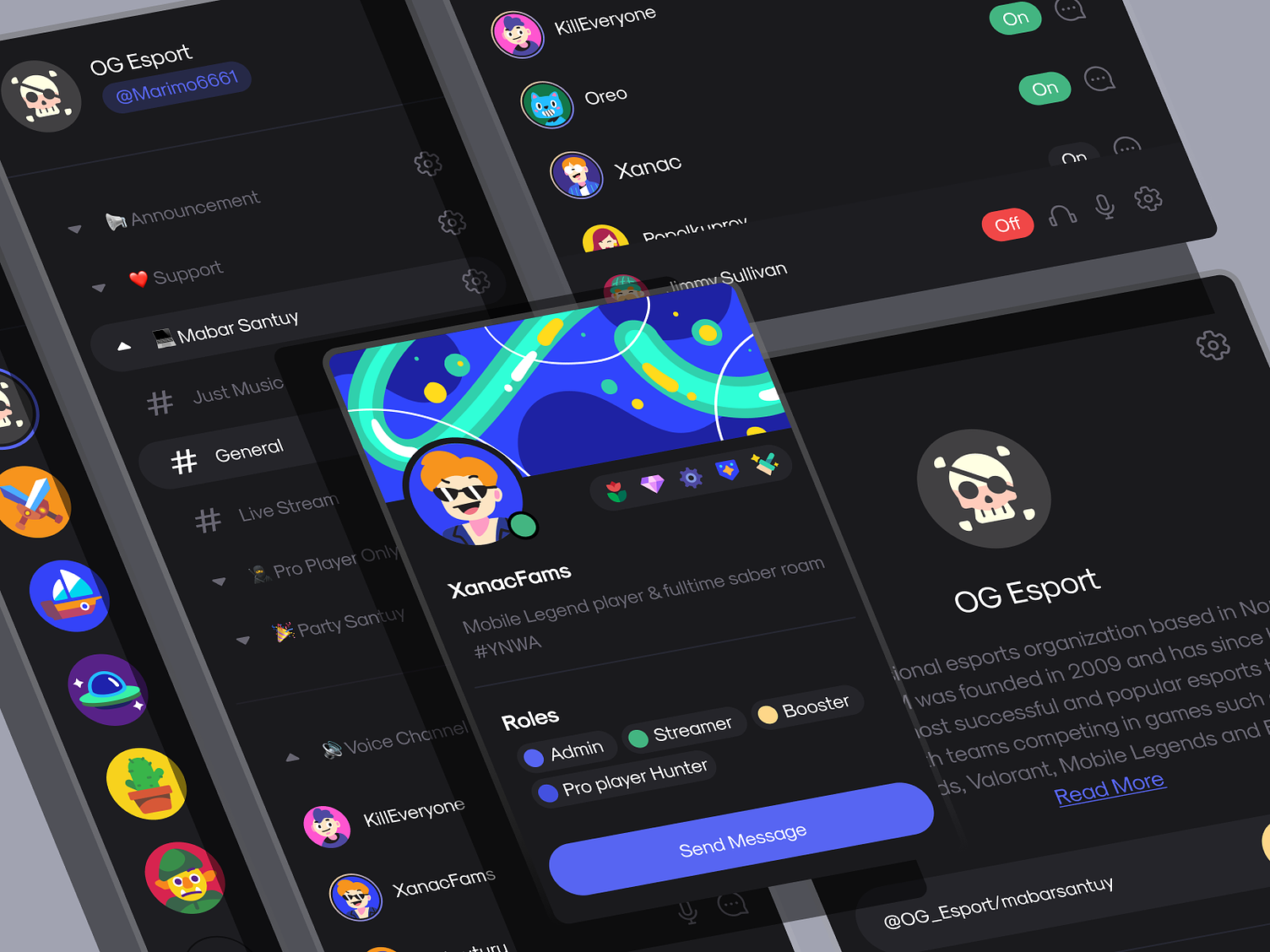
Discord: Known for its chat rooms and voice channels, Discord fosters a strong sense of community. Crypto projects can establish their own Discord servers to directly interact with their user base, provide customer support, distribute updates, and even create chatbots to answer FAQs or automate tasks. Influencers can host AMAs (Ask Me Anything) sessions or live discussions on Discord for a more personal connection with their audience.
Telegram: Telegram, known for its focus on privacy and secure messaging, is another popular platform for crypto communities. Similar to Discord, Telegram allows for the creation of groups for project teams to share updates, announcements, and engage in discussions with their user base. Telegram channels can also be utilised for broadcasting information to a wider audience. Recently, Telegram has also launched ads to promote your channels in wider communities. However, due to Telegram's privacy features, it's crucial for advertisers to ensure compliance with regulations and avoid misleading marketing tactics.
Regulations and Transparency: Building Trust for the Long Term
It is important to remember that both content marketing and influencer collaborations require careful planning, execution, and monitoring to ensure regulatory compliance and mitigate associated risks. Advertisers must navigate a complex web of regulations and guidelines governing content creation, disclosure requirements, and promotional activities, particularly in areas such as financial services, securities, and consumer protection.
By working closely with legal experts, adhering to best practices, and maintaining transparency in their marketing communications, advertisers can minimise the risk of regulatory scrutiny and build trust with their audience over the long term. Ultimately, by combining creative content marketing strategies with strategic influencer collaborations across platforms like Twitter, Discord, and Telegram, cryptocurrency advertisers can effectively navigate regulatory challenges, foster community engagement, and achieve their marketing objectives in a dynamic and evolving landscape.
The world of crypto advertising is moving fast, but fret not! This guide equips you with the tools to navigate the exciting opportunities and conquer the complexities of this dynamic industry.
While major tech players and paid media have significant influence, their presence does not have to be a hurdle. By understanding their operations, we can adapt our strategies to ensure regulatory compliance while still reaching a vast audience. Additionally, co-marketing initiatives with like-minded crypto projects allow us to leverage each other's strengths, amplifying our collective message. Imagine the positive impact we can create by collaborating!
Of course, navigating regulations and a competitive landscape presents challenges. However, a proactive and adaptable approach, combined with a commitment to sharp marketing strategies, empowers us to overcome them. Creativity, innovation, and ethical practices are our secret weapons, allowing us to stand out, build trust, and foster deeper connections with our target audience.
So, let us combine these effective strategies with powerful influencer partnerships, compelling content marketing, and a steadfast commitment to regulatory compliance. Together, we can navigate the ever-evolving crypto advertising landscape and achieve remarkable things!
In the fast-paced digital world, businesses must continuously adapt their advertising strategies to keep up with ever-changing technologies and consumer preferences. To thrive and maintain audience attention, embracing innovation is essential. While Generative AI may be unfamiliar to some, it has been quietly revolutionising the advertising sector with its ability to explore new realms of creativity and interaction. With that in mind, let’s delve into the capabilities of Generative AI and its impact on advertising, particularly in terms of fostering creativity and enhancing audience engagement in this era.
Evolution of Ad Creativity
Let's kick things off by diving into the fascinating journey of ad creativity. We'll trace its evolution from the old-school methods to the cutting-edge techniques made possible by modern tech like Generative AI. Understanding this shift is key to grasping just how much of a game-changer Generative AI is in revolutionising the creative side of advertising.
So back in the day, ads were all about manual labour and gut instincts. Think print, radio, and TV ads – they were effective, sure, but they lacked the scalability and precision needed for today's digital world. Fast forward to the digital age, and everything changes. The internet and digital tech open up a whole new world of possibilities for business owners. Suddenly, it's all about online platforms, dynamic ad formats, and personalised targeting strategies that really speak to consumers.
Technological advancements have been a driving force behind the evolution of ad creativity. From graphic design software to programmatic ad platforms, technology has empowered advertisers to push creative boundaries like never before. And here's where Generative AI comes in - it is the latest frontier in ad creativity; using machine learning and neural networks to churn out all kinds of creative assets – images, videos, ad copy, you name it. With Generative AI, advertisers can dream up, create, and distribute ad campaigns in ways that were previously unimaginable. It's a whole new world of possibilities, and we're just scratching the surface of what's possible.
Exploring the Functionality of Generative AI in Advertising
Generative AI technology stands as a significant advancement in the advertising realm, providing fresh solutions for crafting engaging ad content. Essentially, generative AI utilises advanced algorithms and neural networks to independently produce a variety of creative elements, spanning images, videos, ad copy, and design layouts. Unlike traditional methods relying on human effort and manual processes, generative AI operates autonomously, sifting through extensive data sets and recognising patterns to generate customised content that connects with specific target audiences. This technology streamlines ad creation, trimming workflows, cutting production costs, and enabling advertisers to explore a wide array of creative ideas in real-time.
A standout application of generative AI in advertising lies in its capacity for dynamic content generation. By leveraging machine learning algorithms, you can craft personalised ad experiences tailored to individual preferences and behaviours. For instance, generative AI can analyse user data on-the-fly to dynamically adapt ad messaging, imagery, and offers based on factors like demographics, browsing habits, and past interactions with the brand. This dynamic content generation approach empowers business owners to deliver highly relevant and captivating ads that grab audience attention and drive conversions.
Across the digital advertising landscape, numerous generative AI tools and platforms have emerged, empowering owners such as yourself to leverage this technology in your campaigns. For example, platforms like Phrasee specialise in using generative AI to optimise email subject lines and ad copy for maximum impact. Similarly, companies like Adobe offer AI-powered creative tools enabling advertisers to generate personalised content at scale, from dynamic display ads to tailor-made landing pages. These instances showcase how generative AI is reshaping the advertising industry, offering advertisers inventive solutions for crafting compelling, personalised ad experiences resonating with audiences in today's digital landscape.
Generative AI takes ad creativity to the next level. This technology isn't just about automating tasks – it's about sparking new ideas and pushing creative boundaries in ad campaigns. By leveraging Generative AI, advertisers can explore uncharted territories of creativity, experimenting with fresh concepts and innovative approaches that resonate with audiences on a deeper level. From generating eye-catching visuals to crafting compelling ad copy, Generative AI offers a wealth of creative possibilities that can breathe new life into advertising campaigns.
“88% of respondents are actively using or experimenting with AI technologies in their marketing efforts.”
Furthermore, how does AI-generated content break through creative barriers? Well, it's all about thinking outside the box and embracing the unexpected. Generative AI has the power to churn out a vast array of content variations, allowing advertisers to explore different angles and perspectives that may have been overlooked using traditional methods. This opens the door to unconventional ad concepts and unique storytelling opportunities that capture audience attention and leave a lasting impression. With Generative AI, advertisers can unleash their creativity and create ads that stand out in today's crowded digital landscape.
According to a survey by Forbes, the findings reveal a significant uptick in AI adoption among marketing professionals. An impressive 88% of respondents are actively using or experimenting with AI technologies in their marketing efforts. Additionally, 12% plan to explore AI in the future, indicating a growing interest in its potential. In terms of application, marketing teams are primarily utilising AI for content personalisation (47%), chatbots (47%), content production and creation (44%), and product or content recommendations (37%). Notably, these areas highlight the pivotal role of AI in enhancing content creation processes.
Overall, generative AI is becoming increasingly integrated into various aspects of marketing, both internally and externally. This trend underscores its importance in refining marketing strategies and fostering deeper engagement with audiences. In addition, the research highlights the primary ways marketing teams are employing generative AI. These encompass not only asset creation (52%), as previously mentioned, but also customer engagement and retention (47%), and data analytics (39%).
Looking at these applications collectively, it's evident that content creation stands out as the predominant use of generative AI within marketing teams. Content-related tasks such as asset creation, brainstorming, editing, and personalised content creation are all significant areas where AI is revolutionising marketing practices.
Enhancing Brand Engagement
We'll delve deeper into how generative AI-driven ads are transforming audience engagement. These ads go beyond typical promotions, delivering dynamic and personalised content designed to resonate with viewers on a personal level. Generative AI empowers advertisers to create ads tailored to their target audience, utilising advanced algorithms to generate relevant and impactful visuals and messaging. Whether it's captivating imagery or compelling copy, AI-driven ads have the ability to cut through the clutter and make a lasting impression on consumers.
Moving on to real-world examples, let's explore how AI-generated content is elevating brand engagement metrics. Case studies consistently show that ads created with generative AI outperform traditional ads in terms of engagement, click-through rates, and conversions. For example, a prominent retail brand saw a significant increase in click-through rates and sales by using generative AI to personalise product recommendations in its online ads. Similarly, a travel company experienced higher levels of brand recall and customer engagement by incorporating AI-generated visuals into its dynamic ad campaigns. These examples underscore the impact of generative AI on brand engagement, demonstrating its ability to foster meaningful interactions with consumers.
Moreover, generative AI-driven ads offer flexibility and scalability advantages. Unlike traditional ads requiring manual updates, AI-generated ads can be easily adjusted in real-time to reflect changing market dynamics, audience preferences, or campaign goals. This adaptability enables advertisers to remain agile in today's fast-paced digital landscape, ensuring their ads remain relevant and effective in capturing audience attention. With generative AI, brands can unlock new levels of brand engagement, establishing deeper connections with consumers and driving sustained business growth.
Challenges & Considerations
As we delve into the realm of generative AI in advertising, it's important to recognise the potential challenges and limitations associated with this innovative technology. One key challenge is the complexity of implementing generative AI systems, which often require specialised technical expertise and resources. Advertisers may face hurdles in effectively integrating generative AI into their existing workflows and platforms, leading to potential delays or setbacks in campaign execution. Additionally, the sheer volume of data required to train generative AI models can pose logistical challenges, particularly for smaller advertisers with limited access to extensive data sets.
Another consideration is the risk of over-reliance on generative AI in the creative process. While AI-driven ads offer unprecedented capabilities for generating compelling content, there's a danger of sacrificing brand authenticity and the human touch in favour of automated solutions. Advertisers must strike a balance between leveraging generative AI to enhance creativity and maintaining the unique voice and identity of their brand. This requires careful oversight and collaboration between creative teams and AI developers to ensure that AI-generated content aligns with the brand's values and resonates with its target audience.
To address these challenges, advertisers can take proactive steps to mitigate risks and maximise the benefits of generative AI in advertising. This may involve investing in training programs to upskill employees on AI technologies, fostering a culture of innovation and experimentation within the organisation, and establishing clear guidelines and protocols for integrating AI into the creative process. Additionally, advertisers should prioritise transparency and authenticity in their AI-driven campaigns, clearly communicating to consumers when AI technology is being used and ensuring that AI-generated content reflects the brand's personality and values. By navigating these challenges thoughtfully and strategically, advertisers can harness the power of generative AI to drive meaningful engagement and deliver impactful advertising campaigns in today's digital landscape.
Future Implications and Trends
Alright, let's take a peek into the crystal ball and see where generative AI is headed in the world of advertising. The future looks pretty bright, with plenty of exciting developments on the horizon. One thing's for sure: generative AI is here to stay, and it's only going to become more integral to the ad creative process. As technology continues to evolve, we can expect to see even more innovative uses of generative AI in advertising campaigns, from hyper-personalised content to immersive experiences that blur the lines between digital and reality.
So, what are some of the emerging trends and technologies shaping the future of AI-driven ad creativity? Well, for starters, we're seeing a growing emphasis on augmented reality (AR) and virtual reality (VR) experiences in advertising. These immersive technologies offer advertisers new ways to engage with consumers, creating interactive ad experiences that capture attention and drive brand engagement. We're also seeing advancements in natural language processing (NLP) and voice recognition technology, opening up new possibilities for conversational ads and voice-powered interactions.
As we look ahead, it's clear that generative AI will continue to push the boundaries of creativity in advertising, enabling brands to deliver more personalised, engaging, and immersive ad experiences. From AR-enhanced campaigns to voice-powered interactions, the future of AI-driven ad creativity is full of exciting possibilities. So buckle up and get ready for a wild ride – the future of advertising is shaping up to be pretty darn awesome.
The emergence of Generative AI marks a pivotal moment in advertising, ushering in a transformative era of consumer engagement. From traditional print and broadcast mediums to the dynamic digital landscape, advertising has continually evolved to capture audience attention and prompt action. Generative AI represents the latest evolution in this journey, offering advertisers unprecedented capabilities to create personalised and impactful ad experiences.
Looking ahead, it is imperative for advertisers to recognize both the tangible impacts and ethical considerations associated with AI-driven ads. While AI technology offers unparalleled opportunities for creativity and engagement, there is a need to ensure authenticity and human connection are not sacrificed in pursuit of automation. Striking a balance between leveraging AI to enhance creativity and preserving the unique identity of brands is essential to building trust with consumers and fostering long-term brand loyalty.
Moreover, as AI continues to shape the advertising landscape, it is essential to consider its role in driving productivity and preparing for future advancements. By harnessing the power of AI-driven creativity, advertisers can unlock new levels of brand engagement and forge deeper connections with consumers. However, this journey must be approached with responsibility and foresight, ensuring that AI is used ethically and transparently to enrich lives and foster genuine connections in our ever-evolving digital ecosystem.
In this fast-paced world of advertising, Generative AI is undoubtedly here to stay, and its impact will only continue to grow. By embracing AI technology thoughtfully and strategically, advertisers can navigate this exciting frontier while maximising productivity and preparing for the future of advertising in the digital age.
In this Digital Age, one cannot help but wonder how to keep up with new technology that is growing everyday. As a business owner exploring modern day technology, applications and platforms have made it easy and accessible to keep track of how one’s business marketing is progressing, although not everyone is literate in understanding the data that has been collected. In this article, we will look into Performance Marketing, its variations, and how its contribution can be beneficial to your business.
Unlocking the Data Goldmine: Every interaction, transaction, and engagement within a business leaves behind a trail of valuable data. From customer demographics and preferences to market trends and competitor analysis, this wealth of information forms the foundation of the data goldmine. By effectively collecting, storing, and analysing this data, businesses can uncover valuable insights that fuel informed decision-making and drive growth.
Understanding Performance Marketing
Not to be confused with Digital Marketing, Performance Marketing is a sub-category under digital marketing; which focuses on collecting, analysing quantifiable data and utilising that data to see how well one’s business is progressing and indicate what action to be taken next on platforms. This can be done multiple ways based on payment models, channels, objectives or a combination of the three. Digital Marketing on the other hand, encompasses all online marketing activities and focuses on creating seamless brand vision across multiple channels.
In short, performance marketing is a result-oriented marketing approach and is driven by data whereas digital marketing employs diverse tactics; targeting different stages of the marketing funnel, with performance marketing acting as a specialised tool within it. Additionally by studying this data, you can narrow your target audience, measure your ad’s performance and optimise your platform to suit the user's interests and preferences.
Importance of Performance Marketing
Understanding Performance Marketing is vital nowadays as the advancement of technology will not stop growing, change is inevitable and we do our best to keep up with modern globalisation. To recap, Performance Marketing is a data-driven and results-oriented approach in which business owners pay to achieve a specific action or goal. By understanding and utilising it effectively, your business can be ahead of others in the digital world. Here are other qualities of Performance Marketing can bring to your business:
Measurable results in a Data-Driven World: Focusing on measurable results unlike traditional advertising and its unpredictable outcome, Performance Marketing allows you to directly evaluate the effectiveness of your campaigns by tracking specific actions like website visits, lead generations or sales conversions. Furthermore, it provides valuable insights on how to optimise your marketing efforts and maximise your ROI.
Cost-Effectiveness & Budget Optimisation: With the help of performance marketing, you do not have to worry about spending too little or too much on your ad to get results you desire, as you only pay for tangible results and maximise the impact of your marketing investment on it since you will not be wasting it on ineffective strategies. It allows you to optimise your budget effectively by allocating resources to campaigns that drive desirable outcomes.
Reaching the Right Audience with Targeted Strategies: By utilising various targeting options based on their demographic, interests, behaviour and other relevant factors, you will be able to reach the RIGHT audience with your message and this will increase the likelihood of your engagements and conversions in the fierce competition of attention in this digital world.
Increased Transparency & Accountability: With clear goals, performance metrics and data-driven reporting, this cultivates transparency and accountability in your marketing efforts. You are able to track data in real-time, hold your partner accountable for delivering results and make informed decisions based on concrete data you have collected. Hence, transparency builds trust and ensures your marketing investments are aligned with your overall business goals.
Adaptability & Flexibility: As you are able to view performance data of your business, Performance Marketing gives you flexibility on changing your campaign strategies and maximising your impact to stay relevant according to the market change and your audience's ever evolving preferences.
Consumer Acquisition & Conversion: By focusing on actions that matter, like website visits or sign-ups, Performance Marketing helps you acquire leads with a higher chance of converting - directly contributing to your business growth and achieving your desired marketing objectives.
Brand Awareness & Reputation Building: As data-driven insights can help you understand and refine your brand message, it contributes to your brand awareness and reputation building. You will be able to create engaging contents that positively influence your brand perception by targeting relevant audiences AND building their trust.
Scalable & Data-Driven Decisions: Depending on your budget and needs, your campaigns can be easily scaled up or down - this allows you to tailor your marketing efforts according to your current resources and business goals. As this is data-driven, you are able to make informed decisions on your marketing investments, ensuring you allocate your resources effectively and achieve optimal results.
How Is Data Collected?
It is not uncommon to hear the term metrics and KPIs when it comes to handling data. Not only there are various types of metrics, you need to choose which one applies to your business and your goals. There are three major metric categories to look at; business performance, website and ad/social metrics. Multiple softwares and applications have been made available to read all this data and have them analysed - platforms such as Meta or Google already have their own embedded analytical tools to do so but sometimes it may not be enough depending on what you are looking for which is best for your business. To keep your head afloat, we will delve into the categories:
Business Performance Metrics
This metric encompasses everything related to your business in terms of its success and health. With its purpose to identify areas of improvement, assess financial records and track the progress of reaching your goal; this data is tracked over a long period of time i.e quarters or years. With its assistance, you can view the rate of your revenue, profit margin, market share, customer satisfaction and employee turnover.
Website Metrics
This measures the performance and user interaction of your business site which will give you an idea on how to optimise your site conversions as you will be able to narrow down who your target audience is, identify website usability issues as this metric is tracked in real-time, daily or weekly. All in all - your website’s traffic, bounce and conversion rate, time the audience spends on your site and how many times it has been viewed will be under this metric.
Ad/Social Media Metrics
This metric is dependent on your campaign or which platform you are using as it focuses on the effectiveness of your advertising. As it is subjected to a specific action, it measures the click-through-rate (CTR), cost-per-acquisition (CPA), impressions, reach and engagement (likes, shares, comments). By looking at this, you can review your ad’s performance, optimisation of your ad targeting, monitor your brand sentiment and track your business’ return-on-investment (ROI).
Types of Performance Marketing
Before we look into the types of approach you should decide for your business, always remember your target audience and goal as you can always combine multiple approaches into one. These approaches could be based on payment models, channels and objectives which we will explain below:
Payment Models
When you come across this approach in performance marketing, you should only be paying for measurable results and it can be a hybrid model. Considering that this model requires payment, always think of your budget and risk tolerance - not to mention, negotiate your terms with your publisher carefully. Here are some commonly used payment model examples:
Cost-Per-Click (CPC)
Cost-Per-Acquisition (CPA)
Revenue Share
Channels
This approach is categorised by what channels you choose for your business and it does not have to be just one, marketers are now doing omnichannel marketing as it integrates multiple channels to provide a seamless, consistent experience for consumers. By choosing the right channels, you can understand your goal, target audience better; and optimise your way through building your brand awareness!
Search Engine Marketing (SEM): This method utilises paid search ads (e.g CTR, CPA, conversion rate) to actively target users searching for relevant keywords. Moreover, it is ideal for driving website traffic, generating leads and acquiring consumers with high purchase intent. An example is to optimise your ad and landing page with relevant keywords.
Social Media Marketing (SMM): This method utilises running targeted ads, creating engaging content and leveraging influencer marketing to reach specific audiences. You can view this easily by looking at your impressions, engagement rates, follower growth or by cost-per-lead (CPL). Doing this marketing will lead to higher brand awareness, consumer engagement, lead generation and community building by using various ad formats depending on the platform you use.
Content Marketing: This method focuses on creating and distributing valuable content (articles, videos, infographics) that attracts and engages your target audience. This is an ideal approach if you are looking to build your brand awareness, educate potential consumers and it can generate organic leads and conversions. One tip is to optimise your SEO to improve organic search visibility.
In the Digital Age, Performance Marketing is Your Survival Guide
Forget outdated marketing tactics that leave you clueless about their impact. In today's fast-paced digital world, Performance Marketing is your compass, leading you towards success. This data-driven approach isn't just about throwing darts in the dark; it's about precision targeting, measurable results, and laser-focused optimisation.
Think of it like this:
No more wasted budget: You only pay for tangible results like leads and sales, not empty promises or fleeting impressions.
Target the right audience: No more shouting into the void. Performance marketing helps you find your ideal customers and speak directly to their needs.
See what works, ditch what doesn't: Data is your friend. Track your progress, analyse results, and refine your campaigns in real-time to maximise impact.
Build trust and accountability: Clear goals and measurable outcomes mean everyone's on the same page, working towards shared success.
Adapt and evolve like a pro: The digital landscape is constantly changing, but performance marketing lets you adjust your strategies on the fly, staying ahead of the curve.
Turn leads into loyal customers: Attract qualified prospects, nurture their interest, and convert them into brand advocates, all through data-driven insights.
Build a brand they love: Data helps you understand your audience and craft targeted messages that resonate, building trust and positive brand perception.
Grow at your own pace: Scale your campaigns up or down based on your needs and resources, making the most of every investment.
STOP GUESSING, START WINNING. Performance marketing isn't magic, but it's pretty darn close. By understanding your audience, setting clear goals, and choosing the right tools, you can unlock its potential and watch your business flourish in the digital jungle.
And the best part? It's a continuous journey of improvement. This isn't a one-shot deal. Performance marketing thrives on collecting data with specific, measurable goals in mind. Then, you can constantly experiment and improve your ads based on real-time results. This translates into more bang for your buck (increased ROI), improved accountability, greater transparency in your marketing efforts, and ultimately, better decision-making for your business.
Ready to start your journey? Define your target audience, identify your goals, and let's explore the best strategies for your unique needs. Together, we can turn performance marketing into your secret weapon for digital domination!
Not sure where to start your digital domination? Not to worry - our experts at Quokka Media are more than ready to help you out!
Contact us today to learn more about our services.
Building trust and credibility is crucial for any brand to succeed, and brand advocacy plays a vital role in achieving this.
According to a report by BrightLocal, 46% of consumers aged 18-34 trust online business reviews as much as personal recommendations, while 35% of people trust consumer reviews as much as recommendations from social personalities – highlighting the importance of social proof and user-generated content.
In this article, we'll explore what brand advocacy is, its benefits, and how you can leverage brand advocacy programs for effective digital marketing strategies.
The Power of Brand Advocacy
Brand advocacy is a marketing strategy that involves turning satisfied customers into brand ambassadors. These ambassadors are passionate about a brand, and they promote it through word-of-mouth marketing or social media.
According to a survey by HubSpot, 81% of consumers' purchasing decisions are influenced by their friends' recommendations. This is where brand advocacy campaigns come in; it's about building a community of advocates who can speak positively about your business and influence their network of contacts.
What is Brand Advocacy and Why is it a Critical Component in Digital Marketing?
In today's digital world, consumers are bombarded with advertisements and marketing messages everywhere they go. They are sceptical of marketing claims and are more likely to trust recommendations from their friends and family.
Brand advocacy is a critical component of digital marketing because it helps build brand awareness, trust, and credibility. It's about turning your satisfied customers into loyal fans who will promote your brand without any incentive. The importance of brand advocacy strings from its power to reach a wider audience than any marketing campaign. They have built trust with their network, and their recommendations are taken seriously.
How to Build Trust through Brand Advocacy?
Building trust with customers is essential for any brand to succeed, and a brand advocacy strategy can help achieve this.
Provide Excellent Customer Service
When customers have a positive experience, they are not only more likely to become loyal to your brand but also more likely to share their experience with others.
Offering exceptional customer service involves going above and beyond to meet the needs and expectations of your customers. This can include providing timely and effective support, personalised interactions, and proactive communication. Through customer brand advocacy, you can create a positive customer experience that can lead to long-term loyalty.
Moreover, excellent customer service can also help mitigate any negative feedback or reviews. If a customer has an issue, addressing it promptly and professionally can turn a negative experience into a positive one. This can create a sense of trust and confidence in your brand, leading to increased customer retention and advocacy.
Encourage User-Generated Content
Nielsen's Consumer Trust Index shows that 92% of customers trust user-generated content more than traditional advertising.
User-generated content, such as reviews or social media posts, allows potential customers to see genuine experiences with your brand, helping to establish your brand's reliability and trustworthiness. By actively encouraging and promoting user-generated content, you can harness the power of social proof to boost your brand's reputation and drive sales.
OfferRewards for Referrals
Offering rewards for referrals has been shown to be highly effective in encouraging customer brand advocacy. According to a study by Texas Tech University, customers who were referred to a brand had a 16% higher lifetime value than those who were not referred. Additionally, the referred customers had a 25% higher likelihood of remaining a customer for at least two years.
By offering rewards for referrals, you can tap into the power of word-of-mouth marketing and turn your satisfied customers into enthusiastic brand advocates. Not only can this help you build trust and loyalty with existing customers, but it can also drive new customer acquisition and ultimately boost your bottom line. So, whether it's a discount, a gift card, or some other incentive, offering rewards for referrals can be a win-win for both your brand and your customers.
How to Leverage Brand Advocacy in Your Digital Marketing Strategy?
Leveraging brand advocacy in your digital marketing strategy involves a strategic approach. Here are some ways on how to effectively utilise brand advocacy:
Leveraging Brand Advocacy for Paid Ads
Find brand advocates whose testimonials can be used in your paid ads. These testimonials can be in the form of written reviews or videos.
Here’s an example from Ana Luisa, a New York based jewellery brand, as they utilise one of their customer reviews in their Instagram ad:
Target Lookalike Audiences
Targeting lookalike audiences is a great way to find potential customers who are similar to your existing brand advocates. By targeting these audiences, you can increase the chances of finding customers who are more likely to become brand advocates.
According to Facebook, businesses that use lookalike audiences see a 29% lower cost per acquisition and a 30% better return on spend on Facebook paid ads compared to other targeting methods. Additionally, a study by AdEspresso found that lookalike audiences have a 38% higher click-through rate (CTR) and a 20% lower cost per click (CPC) compared to other targeting methods.
To target lookalike audiences, you first need to create a custom audience using your existing brand advocates. This custom audience will serve as a template for Facebook, Google, or other platforms to identify other users with similar characteristics and behaviours.
Once you've created your custom audience, you can use it to create a lookalike audience by specifying the size of the audience and the geographical area you want to target. The platform will then analyse the data of your custom audience to find users who share similar traits and behaviours, creating a new audience to target with your paid advertising campaigns.
Use Remarketing to Reach Existing Customers
Remarketing is a targeted advertising strategy that allows you to reach customers who have previously interacted with your brand. It can be done by tracking user behaviour on your website or app and showing them relevant ads when they visit other websites or social media platforms.
By highlighting the benefits of being a brand advocate in your remarketing paid ads, you can encourage existing customers to become more engaged with your brand and potentially become brand advocates themselves.
Leveraging Brand Advocacy for Content Marketing
Content marketing is all about creating valuable content that attracts and engages potential customers. By leveraging brand advocacy, you can create content that is more effective. Here's how:
Create User-Generated Content
Creating user-generated content is a way to showcase genuine experiences from real customers, and is a great way to leverage brand advocacy in your content marketing strategy. This type of content is more authentic and engaging because it comes from real customers. Here are some effective brand advocacy strategies for creating user-generated content:
Create a hashtag and encourage customers to share their experiences with your brand on social media. Repost their content on your own channels to amplify their message.
Ask satisfied customers to leave a review or record a video testimonial about their experience with your brand. You can share these reviews on your website, social media channels, and in email marketing campaigns.
Host a contest that encourages customers to share their experiences with your brand in a creative way, such as through photos or videos. Offer a prize or discount code as an incentive.
Use Brand Advocates as Influencers and Content Creators
Using brand advocates as influencers is a smart strategy to create more authentic and engaging content that resonates with your target audience. These advocates have a genuine connection with your brand, making them an ideal candidate to promote your products or services.
You can start to find brand advocates who have a strong social media presence or blog. Then, approach them to see if they are interested in creating content on your behalf. You can also offer incentives or exclusive access to new products or services to encourage them to become more engaged with your brand. It is essential to establish clear guidelines and expectations for the content they create to ensure that it aligns with your brand's values and messaging. By working with brand advocates as influencers, you can create authentic and engaging content that drives brand awareness and increases your reach.
Leveraging Brand Advocacy for SEM
Search Engine Marketing (SEM) is a digital marketing strategy that includes paid search advertising and website optimization for search engines. By incorporating brand advocacy into your SEM ads strategy, you can enhance your efforts and achieve better results. Here are some effective ways to leverage brand advocacy for your SEM:
Use Branded Keywords
When customers search for a specific brand or product, they are often already familiar with the brand and have a higher likelihood of converting. By using branded keywords in your SEM campaign, you can increase your visibility in search engines and capture more relevant traffic.
According to Google, branded keywords have a higher click-through rate (CTR) than non-branded keywords. In fact, branded search ads have a CTR of about 3.4%, while non-branded search ads have a CTR of only 2.5%.
Use Customer Reviews in Your Ad Copy
By using customer reviews in your SEM ads copy, you can provide social proof to potential customers and increase their trust in your brand.
Identify positive reviews that highlight the unique benefits of your product or service. Use these reviews to create a paid search ad copy that emphasises the key selling points of your offering. You can also incorporate star ratings or other review data into your ad copy to further emphasise the positive feedback from customers.
Optimise Your Website for User-Generated Content
To optimise your website for user-generated content, you can create a section specifically for customer reviews or testimonials. This can be done through various plugins or platforms that allow customers to leave reviews directly on your website. This page can feature reviews and ratings from real customers, as well as images and videos that showcase your products or services.
Leveraging brand advocacy can be a powerful tool for improving your digital advertising efforts. By incorporating brand advocacy campaigns into your advertising strategy, you can build trust and credibility with potential customers, increase engagement with your brand, and drive conversions.
As the digital advertising landscape continues to evolve, it can be challenging to keep up with the latest trends and best practices. That's where Quokka Media comes in. Our team of experts is here to help you navigate the ever-changing digital marketing scene and drive your business's success.